Showing posts with label Essays. Show all posts

12/03/2011

An Overly Long Summary of the Civil War

Last week, I was given a simple assignment: answer six questions, in paragraph form, about the civil war. Being a civil war buff, I was finally relived to cover a part of history I knew too much about. I began to write them down, but soon I grew impatient of writing in such confines, and decided to write out a massive summary. Here it is in its five-page glory.
Note that all quotes are paraphrased, as I did this all from memory without looking at any sources.
That being said, it helps to have access to Ken Burns.


In 1861, the Union had come apart. The North, with its immense power and advantages, sought to destroy the Confederates with a 90 day war. The Confederates felt that they could kill 10 Yankees for every Southern death. Both sides expected a short fight.
That summer, the Army of the Potomac, which had been built up by General Irvine McDowell, marched under his command across the Potomac and into Northern Virginia, bent on destroying the Rebs. In their wake was a massive crowd of spectators, who wanted to see the first battle in what they assumed would be a short and cheerful affair. A rebel force under Joseph E. Johnson and P. T. Beauregard came up to counter them outside the town of Manassas in Virginia. The two armies clashed, and at first it seemed that Union victory was a guarantee. But as time went on, General Thomas Jackson proved to hold enough courage to stand up against the army, “like a stone wall.” The Confederates counterattacked. Terrified, the Union forces fled. Left on the battlefield was disgruntled Manassas resident Wilmer MacLean, who decided to move to avoid the war. The battle was sobering, costing the Union thousands of casualties and shocking the nation, but it was nothing compared to the bloodshed that would follow.
In 1862, as George McClellan was hired to command the Army of the Potomac, a General Ulysses S. Grant was winning battles in spite of everyone else losing. He won several small skirmishes, then attacked Fort Donelson, surrounded it, and declared unconditional surrender. It would become his nickname. Soon, Beauregard and a (different) Johnson were waiting to attack Grant when he drew near enough. Johnson saw his chance when Grant stopped near Pittsburg Landing to regroup. The Confederates drove Grant’s forces back in Shiloh, the first truly bloody and brutal battle of the Civil War, where more men fell than in the Revolution. Grant’s forces were saved due to the Hornet’s Nest, a group of soldiers who refused to retreat, even killing Johnson himself. Grant was soon reinforced by Buell’s Army, which quickly made work of the Confederate forces. Shiloh was won.
Following the rigorous training of his army, McClellan landed on the James River peninsula and sluggishly creeped to Richmond. Joseph Johnson, soon to be replaced by Lee, came to counter him. In a brilliant move, the general at Yorktown convinced McClellan that he was horrifically outnumbered. McClellan demanded more troops, and Lee saw his chance. In the 7 Days, he lost four battles, yet won against the timid McClellan. The failure of McClellan led one of his officers to declare him motivated by “cowardice or treason.” Lincoln replaced McClellan with John Pope, who quickly lost the Battle of Manassas on the same battlefield as Bull Run. Lincoln begrudgingly replaced him with McClellan.
 George McClellan now held the army around Washington, keeping his troops training and preparing. Lee, seeing his chance, invaded the North with the intent to put Maryland in the Union. However, one of his clumsy aides lost the battle plans, and a Union scout discovered them lying in a field. Order 191 gave McClellan the perfect tool for fighting the Confederates, and in a stunning show of his military genius, he waited almost a day until he put them in action. When he finally did, the battle would take place along a meandering creek outside the Maryland town of Sharpsburg known as Anteitam. It was the bloodiest day in American history.
Lee attacked in three forces. The first was repelled in a cornfield. The second mowed down troops from a sunken road until artillery zeroed in on it and blew it to pieces. The final fight took place along a stone bridge, where Union troops defeated the Confederates after an entire day, only to be repulsed by evening. It was not a victory for either army, but it was demoralizing enough for Lee to retreat and for Lincoln to free the slaves.
President Lincoln had been waiting for such a battle to declare the Emancipation Proclamation in order to prevent it from being seen as an empty threat. Once declared, the proclamation freed the slaves in the Confederacy, not the border states. But what it meant took precedence over what it said. It made the fight change from Union and States’ Rights to being about the peculiar institution. This worked wonders on the war. While regiments in the North deserted and the South painted Lincoln as an anti-Christian demon, the proclamation confirmed that Europe would stay out of the war and that Black soldiers would be a likely asset.
In 1863, with the proclamation now in effect, Lincoln went about arming the Blacks. The 54th Massachusetts was formed as the first regiment. Many other regiments soon followed, with multiple cavalry and infantry division to soon bear a great deal of the fighting. The 54th Massachusetts would be pulverized at Fort Wagner, but their heroism in the battle was a major morale boost to the other Blacks. By the war’s end, 10% of the North’s military was African-American. For perspective, the North had fewer than 4%.
Anteitam had another effect on the war. General George McClellan was removed from command, permanently. Lincoln was furious with his lack of exploiting Anteitam. Instead, he hired the commander who had valiantly fought at the Bridge at Anteitam, Ambrose Burnside. Burnside invaded Virginia, searching for the Confederates. He soon reached the Rappahannock River and decided to sack Fredericksburg, a vital railroad link. Unfortunately, Lee soon found him and reinforced Mary’s Heights above the city. 14 hopeless charges later, the Army of the Potomac, crippled and exhausted, withdrew and Burnside was removed from command.
In his place, Lincoln found “Fightin’ Joe” Hooker, who had seen action in various battles before. Hooker came up with a predictable strategy: feign an attack and attack from the rear. Lee saw right through it. In a stunning move, Lee divided his army. Hooker’s forces ran right into one section in the hamlet of Chancellorsville. Hooker then went from being overconfident to downright stupid and refused to push back the Confederates, convinced that it was only a small force. Lee, sensing Hooker’s confusion, then divided his army again and sent Stonewall Jackson around Hooker’s left. Jackson’s men tore through the unsuspecting Union forces and tore the army apart. It left, battered and broken. The Confederate victory came at a price, however. Stonewall Jackson was shot by his own men while preparing for a night attack. He would die several weeks later, whispering, “let us rest under the shade of the trees.”
Lee, now overconfident from the two absolute victories, invaded the North again, pushing for Philadelphia. He entered Pennsylvania and was going towards Harper’s Ferry when there came a report of shoes in Gettysburg. It would be the largest battle in the Western Hemisphere. As units converged, the Confederates took the town while the Federals took a ridge behind a gate that read, “Any persons carrying firearms in this area will be prosecuted.” On the second day, the Union successfully repulsed attacks on Culp’s Hill, and Joshua Lawrence Chamberlain rose to national prominence for his daring bayonet charge on Little Round Top. On the third day, it all came crashing down on the Confederates when Lee ordered George Pickett’s division across a mile-wide field. Half of it was slaughtered. When asked to rally his division, Pickett bitterly told Lee “I have no division.” The next day, on July 4, Lee retreated in a steady rain. With that defeat came another, with equal importance: Vicksburg.
General Grant had won Shiloh, captured half of Tennessee, including Memphis, and seen Admiral Farragut advance up the Mississippi to take New Orleans without firing a single shot. Now, he needed the “key” to the river. The town of Vicksburg, high up on a series of bluffs, prevented any ships from passing via a volley of cannon fire. Grant wanted it taken. In a daring move, he crossed the Mississippi, hacked his way through swamps, sacked the Mississippi capital, and surrounded Vicksburg. For months he poured fire into the city, forcing the inhabitants to live like “prairie dogs.” Finally, on July 4, without word of Gettysburg, the commander of Vicksburg surrendered. Both battles ended Confederate hopes, nearly for good.
In the fall of 1863, Confederates under Braxton Bragg clung to eastern Tennessee, attacking the Unions sporadically. General William Rosecrans was ordered to stop them. In a series of brilliant flanking maneuvers, he drove Bragg all the way to the city of Chattanooga, which he quickly fortified. Bragg slipped back to Chickamauga Creek, where Rosecrans, urged by his men, attacked. The battle was a bloody, murderous fistfight that ended in disaster when Rosecrans opened a gap in his lines. The battle was salvaged by General George H. Thomas, whose actions would gain him of the “Rock of Chickamauga.” Lincoln replaced Rosecrans with him, and soon sent Grant over to end the war in Tennessee. Following Chickamauga, the Army of Tennessee held the high ground outside Chattanooga, known as Lookout Mountain. Grant ordered it taken. His men did so in spectacular fashion, then destroyed the Confederates the next day on an adjacent ridge. Chattanooga was won, and would serve as the launch pad for Sherman.
For this excellent victory, Grant was summoned to Washington to gain the rank of Lieutenant General. He now had control of the entire US Military, and he quickly set a plan in motion. Sherman would sack Atlanta. Sheridan would burn down the Shenandoah. And Meade and Grant would carve out a crescent of blood in Virginia. The plans were set in action.  Sheridan tore through the Shenandoah, burning crops, looting towns, and destroying Jubal Earle’s cavalry. Sherman cut a path of destruction through Northern Georgia, but stalled outside Atlanta. Grant, meanwhile, was overseeing the most vicious campaign of the war.
Operation Overland was a nonstop battle between Grant and Lee along a thirty-mile crescent. Grant employed the same tactic: move by the left flank. So did Lee: bunker down and reinforce. The two armies first clashed in the vicious Battle of the Wilderness. Fought on the Chancellorsville battlefield, it was the most horrifying battle of the war. The “Wilderness” was a thicket of trees laden with skeletons of Chancellorsville. The fighting was hand-to-hand, and companies got lost and fired on their own men. At nightfall, the entire landscape caught fire, scorching men alive while both armies listened to their screams. General Grant, horrified with the battle, broke down and wept in his tent while the flames soared through the woods.
However, there was not stopping the army. Grant pushed on, despite the losses and horrors. He moved onto the next battlefield; a region known as Spotsylvania, where the two armies crippled each other. Then came the cavalry attack on Yellow Tavern, where JEB Stuart was killed. Next came the most one-sided fight, Cold Harbor, where Lee’s troops dug into an embankment and mowed down Grant’s troops, killing 7,000 in 15 minutes. It was the only mistake Grant ever admitted to. At last, Grant outwitted Lee. He feigned an assault towards Richmond, but then attacked Petersburg. Lee got there too, and the two bunkered down for a Trench Warfare siege.
It was now 1864, and Lincoln was facing a dilemma. Sherman was stuck outside Atlanta, and Grant was stuck outside Petersburg. The general populace, appalled by the Overland Campaign, was sick of war. And a man who held a grudge against Lincoln now sought election. George McClellan, the old general, ran against Lincoln in 1864. Lincoln had been attacked in the political arena for the entire war, weeding out Copperheads and being savaged by the press. Now, with his armies stalled, he feared that he would be badly beaten.
Yet fortune would soon change. McClellan’s message of peace was so uninspired, dull, and incoherent that even his beloved army voted for Lincoln. Sherman, who had been stuck outside Atlanta, finally defeated John Bell Hood and took the city. And Sheridan’s reign of terror in the Shenandoah was going exactly according to plan. McClellan, not Lincoln, was badly beaten in the election.
Sherman’s army now was let loose in Georgia. He ransacked Atlanta, burned it to the ground, and then set out for Savannah and the sea, pillaging as he went. Along the way, his men ran into several POW camps. Enraged at what they saw, Sherman’s men turned the pillaging up to 11. The army cut a swath of destruction ten miles wide. Hood, furious that he had been defeated at Atlanta, sought to distract Sherman. He invaded Tennessee, attacking supply columns, but failed to distract Sherman. “Let him go to Ohio if he wants,” Sherman mocked. “I’ll serve him rations when he gets there.” The Rock of Chickamauga, George Thomas, refused to let Hood get farther than Nashville. At Franklin, his Army of the Cumberland thoroughly savaged Hood’s army, tearing it apart after Hood made a series of disorganized charges. Hood resigned in disgrace, and the once-proud Army of the Tennessee was reduced to a mob.
Sherman’s army reached the sea, and the general presented Lincoln the city of Savannah as a Christmas present. They then rolled into South Carolina, declaring that “This is where secession began, and here it shall end!” They hacked through swamps, ransacked towns, burned Columbia, twisted rail lines, and taunted the Confederate civilians. Eventually the march reached North Carolina, where Sherman finally ended his march.
Meanwhile, Grant had finally won at Petersburg. Lee had made a desperate night attack on an earthwork. It was repelled and a counterattack broke the lines. Lee sent a letter to Richmond to evacuate the government. Chaos soon followed. The once-proud Confederate capital was looted and burned by ex-slaves, civilians, and finally, the Union troops. With the city taken, Grant now resolved to end Lee, once and for all.
Lee fled up the Appomattox Creek, with Grant right behind him. Finally, he reached Appomattox Court House, a tiny hamlet where disgruntled Manassas resident Wilmer MacLean now lived. Grant declared that Lee surrender, and met Lee in MacLean’s house. The Army of Northern Virginia was defeated.
The war was over. Jefferson Davis was captured in Mississippi. Robert E. Lee’s house was turned into Arlington National Cemetery. Joseph Johnston surrendered to Sherman. And Abraham Lincoln was assassinated.
Following the war, the brotherhood sentiments that Lincoln had tried so hard to put in place were replaced by Johnson’s disastrous Reconstruction Plan. With slavery abolished, an exodus of Blacks from the South ensured that the landscape would stay forever changed. Bile and hate would rise to new levels in the South. Nathan Bedford Forrest would found the Ku Klux Klan, which would terrify the South until Grant, now president, would send in troops to quell the violence.
However, the Civil War ensured that the United States would continue to exist. It ensured that the nation would live up to what was written in the Constitution, though it would be long after the war that it finally was realized. Most importantly, the war defined the United States as one single united nation.


“Before the war, people would typically say that the ‘United States are…’ But then after the war, and still today, people will say ‘The United States is…’ And that’s what the war did. It made us an is.”

-Shelby Foote

10/06/2011

Alien Founders

It's been a while since I've posted on this blog, as schoolwork, water polo, and lack of motivation have taken their toll. Yesterday, I was considering posting, but didn't know what to write about. So I gave up and went to the TV. In school, I've been studying the American Revolution, and decided to see if there was still a shred of historical programming on the History Channel that could help me. And sure enough, there was something on about the founding fathers. And it taught me a great lesson.

The founding fathers were directly inspired by…
ALIENS!

Fuck you, History Channel. Fuck you.

Unfortunately, there's a large piece of my psyche that loves to feed on stupidity, and so I decided to sit and watch it, jotting down notes to write an explanation as to why this is as stupid as it is. So here it is, my rebuttal to Ancient Aliens: The Founding Fathers.


Ancient Aliens


The episode starts with showing the Founding Fathers and posing the question if they believed in aliens. They reference articles Ben Franklin published in his Poor Richard's Almanacs that mention extra-terrestrials, and call it "proof" that he had solid faith in aliens.
I have one massive problem with this logic. Apparently, believing in aliens means that one believes that aliens came to Earth. I believe aliens exist. Ben Franklin might have as well. However, neither one of us would say that aliens had been to Earth before. Franklin was a skeptic, so I doubt he'd be with that funny looking guy in saying that aliens were responsible for every advancement of man.
The other bits of evidence brought up are the Iroquois myths, about how a pregnant woman descended from the heavens and gave birth to humankind. I love how the guy presenting the myth in the show called the figure an "extraterrestrial." It's so common in Ancient Alien "theorists" that myths of sky-gods refer to aliens that it's seen as one of the greatest pieces of evidence for it. The only real refutation is that humans are an imaginative species. The sky is easily mythologized. So immediately posing aliens as the only answer is not only a huge leap in logic, it's calling the mythmakers unimaginative.

The second portion of their case is that the Founders were directly influenced by aliens. The moment they said "Valley Forge" I turned red from the stupid. Obviously they were referring to Washington's vision. According to myth, during the Valley Forge encampment, George Washington went into the woods and said a prayer. Then, an angel appeared and told him to never give up hope. She told of his victory, the Civil War, and the US's emergence as the most powerful nation on the planet.
I have a few little problems with this story. First comes the fact that it first appeared in 1880, without ever being mentioned earlier. One would think that if Washington told the aid who supposedly introduced the myth, then he would've spoken earlier, since it tells such an amazing prediction. Another problem is the fact that Washington never speaks of it. Never. Not once. This incredibly honest man sees an apparition that tells him about the future of the United States, and lives in a time when such visions were believed. Why then, would he only tell an aid? It could be used as a major rallying cry for the troops, as well as a motivation for the citizens.
Alien?
Finally, the fact that the myth is tied into aliens only adds more questions. If the aliens knew the future, then why would they want D.C. to be built to signal them? If the aliens were rooting for Washington, then why would they wait until Valley Forge to show it? I mean, at Germantown Washington's army, had it been better organized, would've routed Howe. Why wouldn't the aliens help Washington's men directly? Was Friedrich von Steuben an alien? This leap in logic makes no sense.
The next evidence is a UFO that was reported to Thomas Jefferson. This is something to behold, people. The father of the Declaration believes in aliens because he heard about a meteor UFO near Baton Rouge. The incident is about an object that falls from the sky, causing a good deal of heat and light, but does't form a huge crater when it crashes. Of course, meteors do this often, but don't bother telling that to them. The program makes the incident seem so important that it's a smaller leap in logic to assume that Jefferson believed in aliens, you know, like how it's easier to jump the Grand Canyon than Valles Marinas.

Now comes the time when we delve into the classic conspiracy of the Revolution. The Freemasons!
Yes, the Freemasons, who give the Illuminati a run for their money as the favorites of any conspiracy theorist. The Ancient Aliens apparently directly inspired this organization, whose symbols are used for signaling them to land. The program calls the organization a bunch of alien seeking elites who held the believe of extraterrestrials at heart. I'm no expert on Freemasonry, but something tells me that that's a load of shit.
For the most part, it's all about symbols and how they relate to aliens. But then there's the epitome of stupid in this episode. This painting.

                 
As you can see, the painting is decorated with Freemasonic imagery and various symbols. But the program focuses specifically on one little section.
I know it's low resolution, but it should still be clear what the image is: a Jacob's Ladder ascending into a cloud.
But wait, what's this? The cloud's round. What cloud is round? And the lights in it? What cloud has lights in it? No, obviously this is a UFO!
The stupidity of this is so stupendous that I am speechless.

The final part of this heinous special is about how DC is designed to aliens. By this point the stupid was so thick that it was a chore to keep going. Still I sat through it.
Apparently, D.C. is filled with symbols on the streets. This is clear. There's a star, various sets of triangles around important buildings, and Freemasonic symbols all throughout. So, of course, the only possible explanation of these is aliens! For you see, the Washington monument is at an important point in the city, built so that it lines up directly to the Pleiades. Therefore, it is meant to signal aliens. The Capitol Building is built upon a hill. Hills are important places in cities, as often major sites and buildings are placed on hills. However, there is a specific reason that the Capitol was built on that hill. By being on a hill, Aliens could see it was important. And the star streets? What other purpose could they have other than to signal extraterrestrials to come to Earth?

The great alien George Washington.
The program then ends with images of Washington in paintings on the capitol. This painting is shown. Obviously it was designed as a sort of joke about the deification of Washington. But no, it doesn't show Washington as a deity, watching Congress. It shows him among aliens.


History Channel, why do you have this tripe on the air? This program is a menace to intelligence. It is inept at everything it shows, stupid beyond belief, and toxic to minds. It's not just the crackpots who believe this. Because of this show, I know several people who truly believe that the human race has been manipulated countless times by aliens. Intelligent people who have been influenced by this garbage into buying long-refuted idiotic notions that the human race is inept and unable to pull itself up without outside forces.
This show is insulting, insipid, and offensive to the mind. Don't ever watch it, for even mocking it is painful.

9/12/2011

Patriotism

Yesterday was the anniversary of 9/11. Ten years have gone by since that horrific day. I was a little six year old when it happened, and I barely remember that morning. Watching specials on it are the closest I've come to feeling the same emotion that many Americans feel. So, this anniversary did not affect me as it would anyone who lost someone or witnessed the event. It affected me in a very different way.
Following 9/11, there was a surge in patriotism that still lingers to this day. This patriotism allowed such heinous laws like the Patriot act to be passed, and eventually, it allowed the Iraq War to break out. It is something that I personally abhor.
Right or left, people who take this superpatriotic, us above everyone stance really worry me.  The problem that I have with patriotism is that it blinds people with nationalistic ideals that overcome all rational thought. I've been called anti-American for not wanting to recite the pledge in school. In the political arena, President Obama was criticized for not wearing a flag pin. People like Michelle Bachmann have called for investigations on who's "anti-American" in congress. Last year, Glenn Beck hosted the 9/12 Rally to Restore Honor in D.C. This rally leeched off of past accomplishments in American history and was a mockery of patriotism. Hell, the entirety of the Tea Party has based much of their ideology on this faux-patriotism.
Something that these "patriots" are failing to recognize is the difference between patriotism and nationalism. Patriotism is the love of one's country. Nationalism is the obsession of one's country. These people are not patriots, they are nationalists.

"Our country, right or wrong."
          -Stephen Decatur

Nationalism builds up racism. It builds up imperialism. It blinds its followers, wrapped in the flag, and often, religion. A nationalist will have undying love for their country. They will be unresponsive to reason. Historically, nationalist ideologies have been responsible for an endless amount of wars; most notably WWI. WWI was a pointless war fought over a clash of egos. It was fueled by endless nationalism. Another example of nationalism is the Red Scare. The use of irrational fear and the extreme love of America was manipulated to create a political witch hunt.
The people who wrap themselves in the flag and call America God's chosen nation are not patriots. They are nationalists.

"My country right or wrong; if right, to be kept right, and if wrong, to be set right."
         -Carl Schurz


Patriotism is open love for country itself, not its leadership or agenda. A patriot is someone who holds love for their country, but does not blindly follow it. A patriot does not hear a cry for war and immediately declare it a crusade. A patriot does not look at a fault in their society and pretend that it's not a problem. A patriot does not act as a cog in a massive machine with no individuality.
If a nationalist sees his nation bomb the hell out of a smaller country on a faulty excuse, he will declare the excuse valid and insult the smaller nation. A patriot who sees this event will question the reasons and analyze the excuse. In a nation like our own, the patriot would be called a traitor, while the nationalist would be called a patriot.
The "patriots" we have in this nation seem to think that patriotism means someone who always wears flag pins, says the pledge every day, blindly follows whatever the government or their political involvement in the government does, never criticizes anything that America does (unless it's by a politician they dislike), and goes to sleep on an American flag pillow. Someone who criticizes the government or doesn't support a military action will be branded a traitor, communist, or my favorite, socialist.

Of course, the five people who see this post might wonder if I myself am a patriot. Because of the use of the word in this nation, I would not want to call myself one; however, if one considers the real meaning, then almost every loyal American would be called a patriot. I'm just a cynical teenager who finds this fake patriotism to be a pile of bull, but I do love my country. And while the pledge or the national anthem never really affected me, there was one moment where I was overcome by love of country.

Last summer, I was with the Boy Scouts up in the Sierras. It was the final night, and the entire camp was gathered up at a little amphitheater, where two fires were burning. The sun had gone down, but there was just enough light in the sky to bathe the forest in blue moonlight. The amphitheater itself glowed orange from the flame.
Up in front of the crowd stood the staff of the camp. They stood at attention, facing the audience, their faces all glowing orange. The entire camp stood up and at attention as four men, carrying two folded flags, approached the stage. Both stopped in between the fires, and the camp director came down off the boulder. He was in his mid-fifties and sported a white beard. He took out a small slip of paper and introduced the flags. The one I saw was from 1994, and had been flown multiple times in different scouting troops. It had been left out in a storm, ripped, and could no longer properly convey the symbol of our nation. And so the flags were unfolded to be presented to us for one final time.
The flag opened. I looked upon it, at all the faded colors and sad holes, all bathed in an eerie orange glow. I brought my hand up to my forehead and saluted, and we all began to recite the pledge of allegiance. Unlike all those times in school when I would blindly recite it, this time my mind held upon every word, and it all stirred up many emotions deep inside me. We then watched as it was lifted up over the fire to be retired. The flag was lowered gently over the flames, which began to lick greedily at the cloth. The dull orange glow turned to a bright yellow beam, and light smoke began to rise as the fire consumed the old flag. As this went on, the camp director began to sing. His song described where our flag has been flown, describing various scenes in battle and in peace. As he sang, a strange feeling came into my heart, one that I knew, but it was stronger than I had ever felt it before. It was love of country. It was pure patriotism for this great nation; it seemed to overcome everything and swallow up the cynicism that I held.
The fire died down, and the flag had been reduced to a pile of ashes. The entire camp then filed out. As I walked down off the rock and watched the orange glow fade into the trees, my emotions shifted back to normal, but I knew that I loved my country.

That is what patriotism is about. Love of country. It's not about flag pins or saying the pledge. It's about loving your country honestly and sensibly.

9/01/2011

Mercator vs Peters

Over the last week, I have been at school, and there is something in my AP English room that is driving me insane. There is a map on the wall called the Peters Map, and on its bottom is a chart showing why it's better than the classic Mercator projection. The mastermind behind it, Arno Peters, designed it as a response to the widely used Mercator. He showed it as a superior alternative, and he pointed out a bunch of errors and biases in the traditional projection.

Unfortunately for Mr. Peters, two wrongs do not make a right.

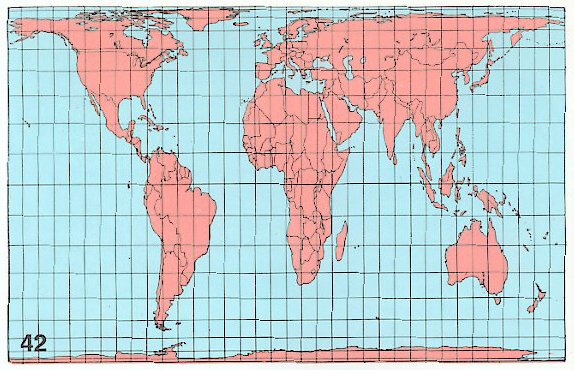
For in his effort to make a map better than the Mercator map, he made a map just as awful. The distortion of the Mercator map expands the north, and it makes the entire globe look top-heavy. Peters responded to this by making the distortion in the north minimize its size while blowing up the equator and stretching it. The result is this:
This was made as a response to this:
Here's the main problem with these maps. Any cartographer knows that there is no way to make a flat world projection without creating massive distortion. Any map, no matter how accurate, will never be as good as a globe. However, the best maps are those that have the least distortion.
The Mercator map is flawed because its authors wanted it to be distorted. This map is so unbelievably biased towards the north that it overwhelms everything else. According to Mercator, North America is larger than Africa, Greenland is nearly endless, and Scandinavia is larger than Australia. It is fairly obvious why someone from the Age of Exploration would want this bias. It makes Europe look more important than the rest of the world, thus making the explorers feel special.
The Peters map is flawed because Mr. Peters wanted it to be the opposite of Mercator. Peters shrunk down the poles and expanded the equator. The result is an unbelievably stretched map that simply looks off. According to Peters, Africa is the same size as Asia, and South America is larger than North America. It is so flawed that it's essentially equal to Mercator.
There is one main reason why both of these maps are so incredibly off. Look up at the grid lines on them. These maps are on flat grids. Every latitude and longitude line meets in perpendicular intersections. It is impossible to create a map based upon these settings that does not look incredibly distorted.
So why is this map still sitting on the wall of my AP English class? Why does the Mercator map still hang on the walls of half of my middle school classrooms? Why do people still use Mercator and Peters, and why is there still a debate between both camps? 
Tradition. Mercator's been used for centuries. Peters directly challenges it. For anyone who looks at maps with the even grid, there are two choices. Peters is the politically correct one, and Mercator is the traditional one. Which one would you choose?


Personally, I prefer this one:


8/07/2011

Layers

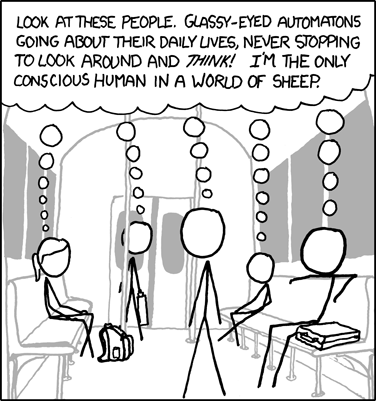
Going about your average day, it's easy to see why we often fall for the misconception that people are one-sided or simplistic. You go to work and see all the commuters as mindless sheep. Or you get to know someone to the point at which you claim that there is no good in them at all. Or you know someone who is so kind to you that you can't think of them doing any wrong.
Here is the big shocker. People are complicated. Each and every one of us has a deep and complex mind with multiple layers to our personality. No matter how one-sided someone may appear, they will always have different layers to them. And no matter how mindless the multitudes appear, each one of them is deep and complex.
I have known this for a while, but I still find myself declaring that a person has no good in them, or that a person cannot do any wrong, or that a person is too simple/stupid to have any depth to them. But this is never true. No matter how sure you are, you will always be wrong.
But what are layers? One one level, they are personalities for specific circumstances. I put on one layer of awkward introverted shyness for one social event, then change it to loud foolishness for another.  And everyone really has two general layers for this: one public and one private.
On another level, they are different personalities all together. One side of me wants to stay introverted and shy, but another part of me want social contact. As a result, I end up following both. One of my more intelligent friends has an entire congress of personalities that he controls, and it's plain to see that in his behavior.
On a third level, they are good and evil. Oftentimes the question is asked: Are people inherently good or bad? Well, the answer is that everyone is inherently both. Sometimes someone can appear to be a good person, but they have a bad side to them. And conversely, someone who you find to be despicable is actually a decent person on some level. There are a few of us who are farther out on the spectrum in either direction, but most of us lie in the middle, where we all have positive motives and all indulge in negative behavior. And our actions are used to judge us unfairly, as an act of compassion raises a reputation while an act of violence ruins it.
But something that is interesting about all of this is that, as we are all human, we all have similar amounts of depth to us. Some of us will waste this depth, others will fulfill its potential. In many ways, this is a better gauge for intelligence than just knowledge. If one could open the psyche of my friend with the congress of personalities and then open the mind of one unintelligent stoner that I know and map out their minds, they would be about the same size. The more intelligent person would be the one who puts these layers to good use.
But the point of this entire essay is just this: Don't just use a short blurb to describe someone.  No one word, sentence, or paragraph can be used to define a person, for nobody can be described in less than a novel. So the next time that you look at the world as a bunch of simplistic people with one dimension to their lives, just remember that our psyches, though varied, are all about the same size, and that the "mindless" commuter you see passing by is about as deep as you.